When you think of children’s books, what do you see? Soft colors, cute animals, and big, round eyes looking back at you? That’s the style we all know. But if you’ve looked at a new book lately, you might have spotted something different - the art feels bigger, brighter, and sometimes even surprising.
In 2025, book illustration for children isn’t just about being cute. They’re designed to evoke emotions in kids. To make them curious, laugh, and have little “wow” moments they won’t forget. Take Hot Dog by Doug Salati , for example. It won the 2023 Caldecott Medal, and every page is full of color and life. The pictures feel like real summer days. The characters seem real, and you can feel what they feel, without reading a single word. It’s art that pulls you into the story instead of just filling space.
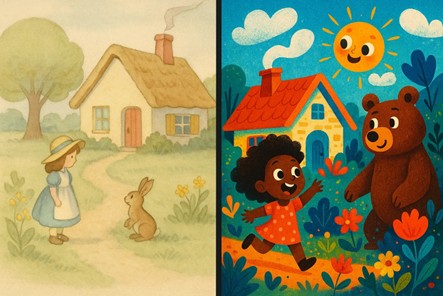
So, what’s causing this change? In this post, we’ll explore the new trends, fresh styles, and creative tools shaping children’s book illustration today.
Not long ago, pictures in children’s books were mostly there to decorate the page. They were pretty, but they didn’t always add much to the story. If you go back a few decades, most books had one main style:
Kids enjoyed them, but they didn’t always spark deep emotions.
Here’s how things have shifted:
Pictures are now part of the story. They can show a character’s feelings, hint at what’s coming, or even tell parts of the story that aren’t in the words.
In the past, illustrations mostly followed the same style. Over time, artists started adding more variety, emotion, and detail.
Tablets, drawing software, and digital brushes gave artists endless ways to create.
Online platforms let illustrators show their work to the world, inspiring fresh ideas and new styles.
All of these changes have built up to 2025, a year where tools, ideas, and creativity have come together to make children’s book art more exciting than ever.
If you look at the latest picture books, you’ll see they don’t all look the same anymore. In 2025, there’s a mix of colors, textures, and ideas that make every book feel different. The goal is to make something more than “pretty” that makes kids stop, look, and feel something.
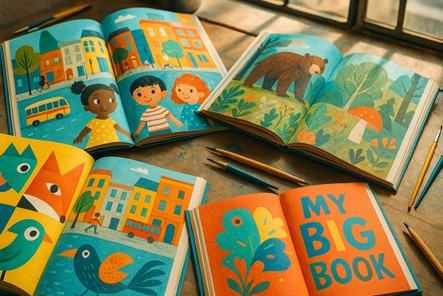
Some of the biggest trends right now include:
These children's book styles make stories more alive and personal, helping young readers connect with characters and worlds in new ways.
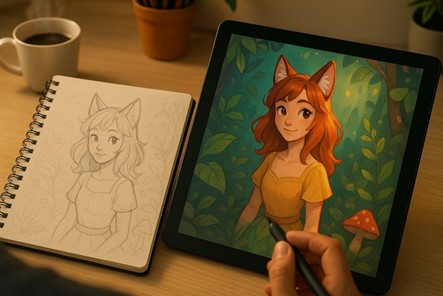
In the last section, we talked about how children's book art styles have become bolder and creative. A big reason for that is the tools artists are using now. While pencils, paints, and paper are still loved by many illustrators, tablets and digital apps have opened a whole new set of possibilities.
Here’s what that looks like in 2025:
Some artists still start with a hand-drawn sketch, then finish it on a tablet. It keeps the warmth of traditional art but adds the polish of digital tools.
Digital art lets illustrators test colors, patterns, and layouts quickly. If something doesn’t work, they can undo it in seconds.
With a book illustration service , authors and artists can share drafts online, give feedback instantly, and work together from anywhere in the world.
Lighting, shading, and textures can be layered in ways that make the page almost feel 3D.
This mix of old and new is one reason children’s books in 2025 feel so alive - every picture can be fine-tuned until it tells the story just right.
Another big shift in 2025 is who’s making the art. Many illustrators aren’t sticking to just one type of book anymore. A comic book illustrator might take on a children’s story as well as bedtime storybooks. This mix of skills is changing how kids’ books look and feel.
Here’s why that’s exciting:
This blend of talents means children’s books aren’t just looking different - they’re being told in new, exciting ways that keep kids turning the pages.
While new styles are exciting, there’s also a lot of love for the old ones. Many illustrators in 2025 are bringing back the charm of vintage children's book illustrations, but with a fresh twist. It’s like giving a classic recipe a new flavor.
Here’s how they’re doing it:
This mix of nostalgia and innovation gives today’s books a comforting yet exciting feel, something familiar for parents and new for kids.
In the past, a children's book illustrator would simply get the story, draw the pictures, and send them off. But now, things are different. Illustrators are often part of the creative process from the very beginning, helping shape how the story looks and feels.
Here’s what’s changed:
This closer partnership means every page works harder to tell the story, and the end result feels more alive and connected for young readers.
In 2025, children’s books don’t just reflect one culture or style. Because of global publishing and the internet, artists and readers are sharing ideas from all over the world. This has made kids' book illustration more varied, colorful, and relatable for children everywhere.
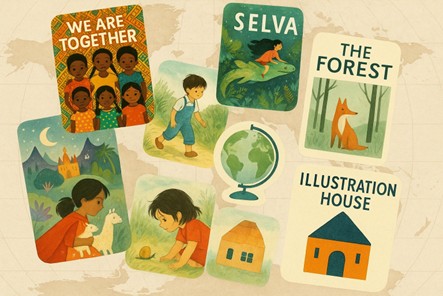
Here’s how that’s showing up in books today:
This global mix means that no matter where a child is from, they can see themselves in a story and discover whole new worlds at the same time.
Even with all the creativity and new tools, making art for children’s books in 2025 isn’t always easy. Illustrators face their own set of challenges while trying to bring stories to life.
Some of the biggest ones are:
Despite these challenges, illustrators keep pushing the limits, finding ways to make every page worth turning.
If 2025 is already full of bold colors, diverse stories, and creative layouts, what’s next for children’s book art? While no one can know for sure, some clear trends are starting to take shape.
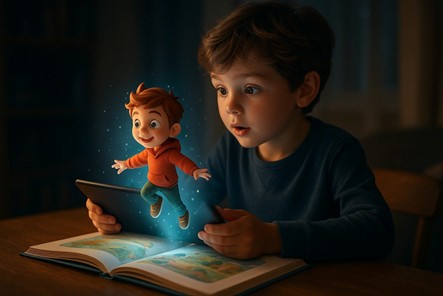
Here’s what we might see soon:
Whatever the changes, one thing will stay the same — the best illustrations will always tell a story that makes kids want to turn the page.
In 2025, book illustration for children has grown into something far more than soft colors and cute animals. Today’s art is full of life, personality, and meaning. From the warmth of vintage illustrations to the energy of modern book art, every picture is part of the storytelling.
Artists are mixing traditional hand-drawn charm with the flexibility of digital tools. They’re bringing in ideas from around the world, showing kids places, people, and cultures they may have never seen before. A comic illustrator might add dramatic angles to a bedtime story, while a skilled book illustrator might fill each page with tiny details that invite kids to look closer.
Whether you’re a publisher, author, or aspiring artist, it’s clear that the field is more open and innovative than ever. The future promises even more exciting changes, blending timeless artistry with new tools and perspectives. And for young readers, that means one thing - stories that look as magical as they feel.
Looking for more information? Call us at +1 (855) 521-5040 for quick support!


Have a project in mind? Reach out to us, and we’ll help turn your ideas into stunning illustrations.
Tell us what you need, and we’ll create a custom illustration just for you. Reach out today and let's get started!
 +1 (855) 521-5040

Copyright © 2026 360 Illustration House | All rights reserved. Terms And Conditions | Privacy Policy | Refund Policy


 LIVE CHAT
 +1 (855) 521-5040